
A Nine-Month Window
Executive Orders 287 & 288 and the Future of Commutation in Wisconsin

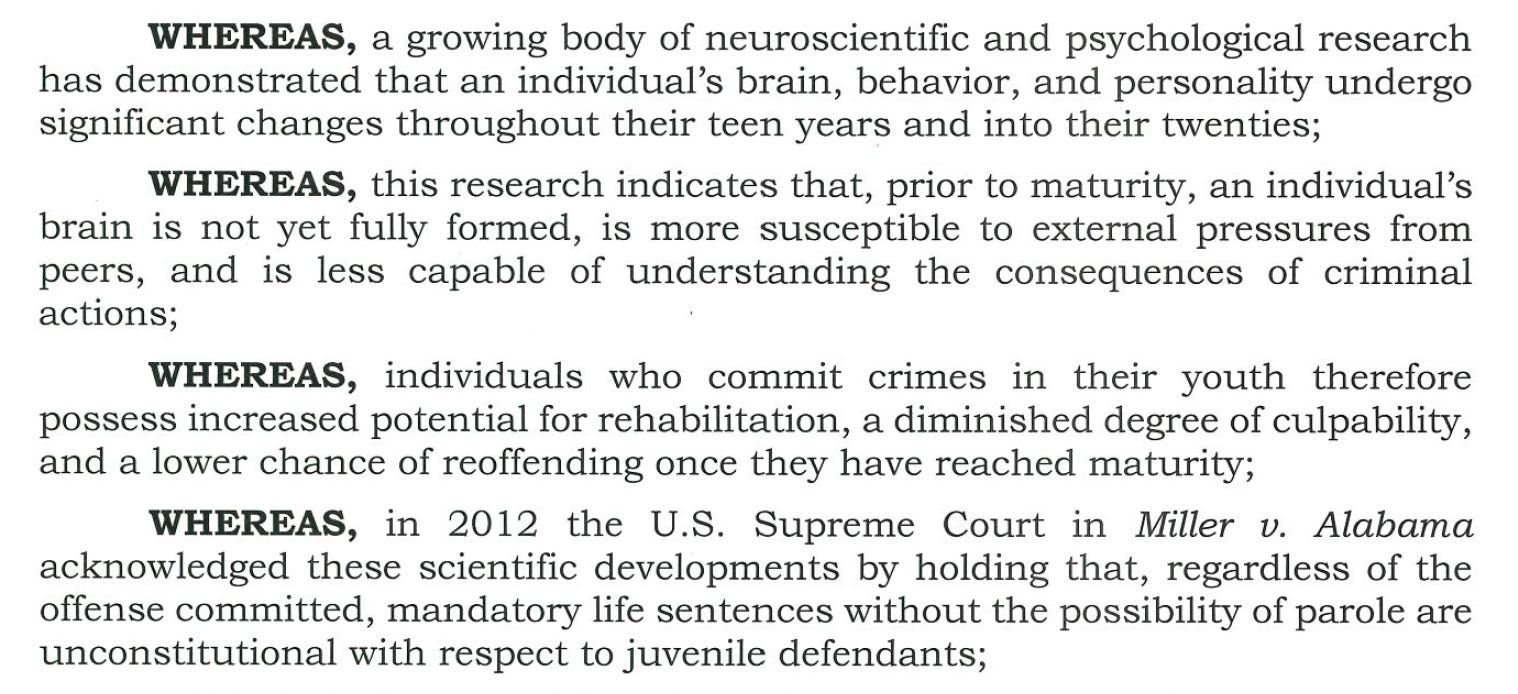
There are moments in governance when an action is less about its immediate effect and more about what it makes possible. Governor Tony Evers’s Executive Orders 287 and 288 fall squarely into that category. They do not resolve the issue of excessive incarceration in Wisconsin, nor do they create a permanent commutation system. What they do is create a window, and that window is narrow. Because both orders establish advisory structures under Wisconsin Statute § 14.019, they are temporary by design. Nonstatutory committees created under § 14.019 automatically sunset on the fourth Monday in January of a new gubernatorial term unless they are reauthorized. That means, as things stand today, the Governor’s Commutation Advisory Board and the juvenile life sentence commutation process have a functional runway of approximately nine months. The question is not whether these executive orders are meaningful—they are—but whether Wisconsin will use this time strategically or allow it to pass as another short-lived initiative that never reaches its full potential.

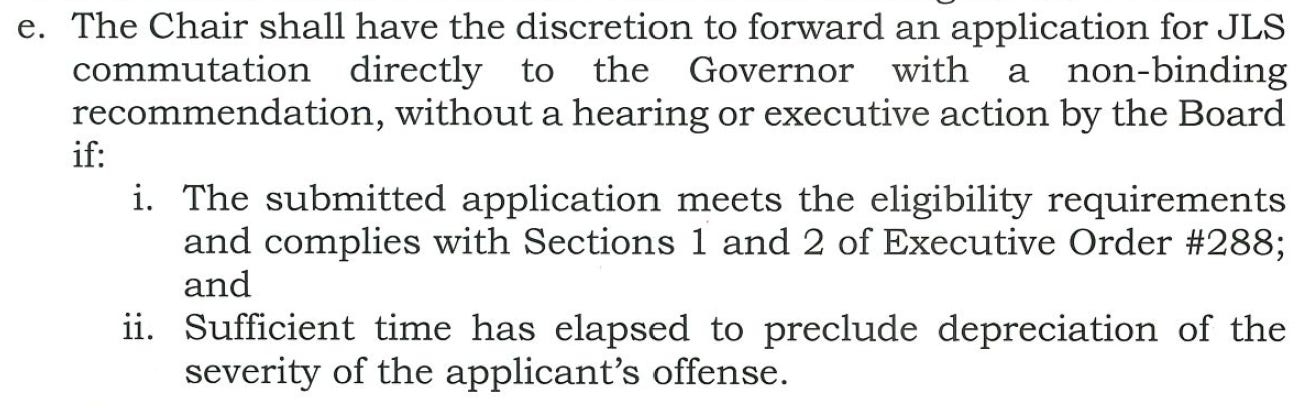
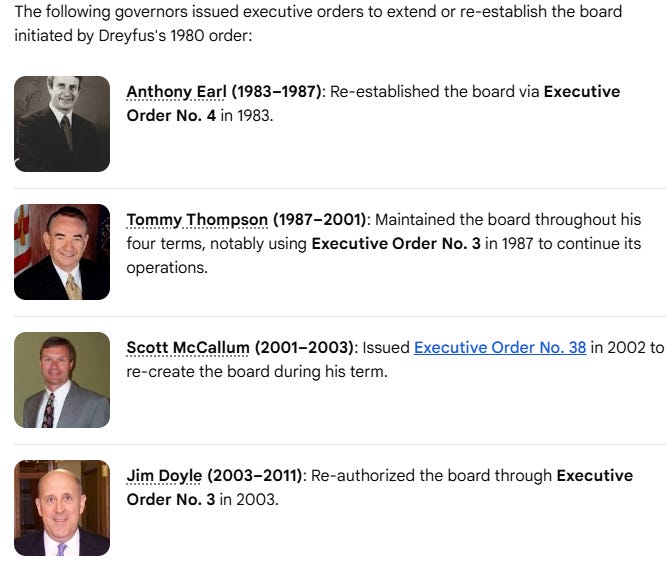
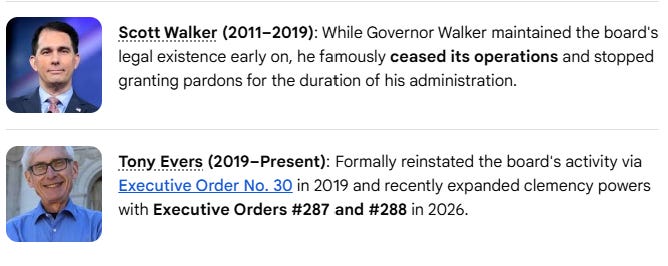
Executive Order 287 establishes a fourteen-member advisory board appointed by the governor, tasked with reviewing commutation applications and making nonbinding recommendations, while Executive Order 288 integrates juvenile life sentence cases into that same structure. The process is structured, but it is also time-intensive. Applications must be complete and compliant upon submission, notice must be provided to courts, prosecutors, and victims with a minimum three-week period before any hearing, and hearings must be publicly scheduled. Afterward, the board deliberates and generates recommendations, including proposed commuted sentences and any conditions attached to them, but the governor retains final constitutional authority under Article V, Section 6. On its face, this resembles the historical advisory model Wisconsin has used before, particularly through the Pardon Advisory Board, which dates back decades, including Executive Order 39 in 1980, where pardon and commutation applications were processed through a similar framework.
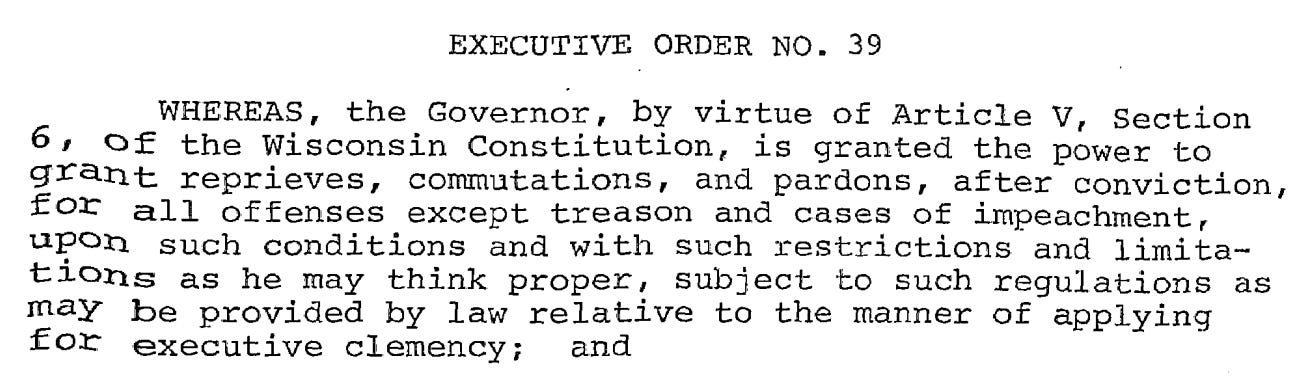
However, Executive Order 287 introduces something critical: a second track. Under its recommendations section, the board’s chair has discretion to forward an application directly to the governor without a hearing if eligibility requirements are satisfied and sufficient time has elapsed relative to the offense. This mechanism is not unprecedented. A similar shortcut was introduced in Executive Order 130 in 2021 for pardons. Its purpose is straightforward—it addresses the constraint of time. The application materials themselves acknowledge that a full review, including background checks, institutional records, and consultation with stakeholders, may take over a year. That timeline exceeds the lifespan of the current advisory structure. What emerges, then, is a triage system in which some cases move through full board review, others are expedited through the chair-forward shortcut, and a significant number may remain unresolved before the committee sunsets. This is not a flaw; it is a signal about how the administration intends to operate within the time available.
From an entrepreneurial perspective, what Governor Evers has done is not finalize a system but prototype one. By placing this structure under § 14.019, he has effectively created a foundation and left its future in the hands of the next gubernatorial administration. Whether this advisory board continues beyond January 2027 will not be determined by statute but by political will. That reality makes it imperative that advocates and stakeholders begin engaging gubernatorial candidates now, asking directly whether they intend to continue, expand, or institutionalize this commutation process. Waiting until after an election will likely be too late.
The constraint of time cannot be overstated. The process requires comprehensive applications supported by verified documentation, victim notification, institutional records, and clear demonstrations of rehabilitation and growth. These are not applications that can be assembled hastily or corrected later. They must be done correctly the first time and must be started immediately. Individuals seeking commutation must begin now, and advocates must assist in building strong, complete submissions. Strategic selection also matters. Early cases that are well-positioned for success will shape how the process is perceived and whether it gains momentum or is dismissed as ineffective.
There is real opportunity here. Commutation is not simply about release; it is about redefinition. It is about recognizing that individuals who have demonstrated growth and accountability can reenter society as contributors. In many cases, those individuals are uniquely positioned to serve as credible messengers, violence interrupters, and mentors to youth who are currently on similar trajectories. Their lived experience carries weight in communities where relatability determines whether intervention is effective. At the same time, there is risk. The risk is that attention will focus on those leaving the system while ignoring those continuing to enter it. We have seen this pattern before, where new initiatives generate optimism while underlying structures remain unchanged. Youth continue to be criminalized, behavioral health challenges remain untreated, and the pipeline persists. If that happens here, commutation will function as a pressure release rather than a mechanism for structural change.
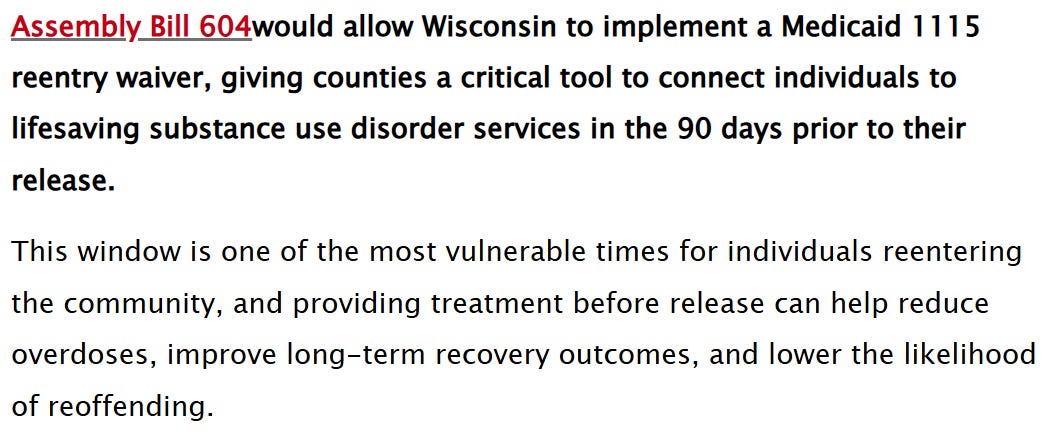
Reducing incarceration sustainably requires more than commutation. It requires infrastructure. Healthcare and behavioral health systems must be prepared to absorb individuals upon release, and programs like AB 604, which will potentially provide pre-release Medicaid eligibility and case management, must be integrated into this process rather than treated as separate initiatives. Just as importantly, the silos that define government operations must be addressed. Wisconsin already has numerous advisory bodies, including the Governor’s Equity and Inclusion Advisory Council, the Children Come First Advisory Council, and the Juvenile Justice Advisory Council. Each brings valuable insight, but they operate largely in isolation. Government agencies are not designed to break down their own silos; that responsibility falls to the community. Community members, advocates, and private actors must create the connections between these systems to ensure that efforts are aligned and effective.
Executive Orders 287 and 288 represent a positive step, but they are only a step. They create a process where none previously existed in this form, introduce flexibility through dual-track review, and open a window for individuals who might otherwise have no path forward. But they do not solve the structural drivers of incarceration, they do not guarantee continuity, and they do not replace the need for coordinated, community-driven accountability. That work remains. If this opportunity is to reach its full potential, it will require immediate action from applicants, strategic coordination from advocates, clear commitments from future political leadership, and sustained pressure from the community to connect systems that have historically operated in isolation. Without that coordination, outcomes will remain fragmented, and the data will never fully demonstrate what is possible.
This is a nine-month window. It is an opportunity to demonstrate that commutation can be structured, effective, and aligned with public safety. It is a chance to show that reintegration strengthens communities when it is done intentionally. But it is also a test. It is a test of whether Wisconsin will treat this as a moment or as the beginning of something larger. The process exists, the pathway exists, and the opportunity exists. What remains to be seen is whether we will use it.
Incredible growth and development can happen in 9 months.